
Commercial Land for Sale in Tyler, TX & East Texas
Ten acres is not always ten developable acres. A commercial tract can look attractive on acreage, frontage, or price and become a completely different opportunity once access, utilities, drainage, topography, floodplain, easements, parcel configuration, development requirements, and the intended use are understood.
Ihrig Properties represents landowners, buyers, businesses, investors, and developers evaluating commercial land throughout Tyler and East Texas.
Commercial land & development sites
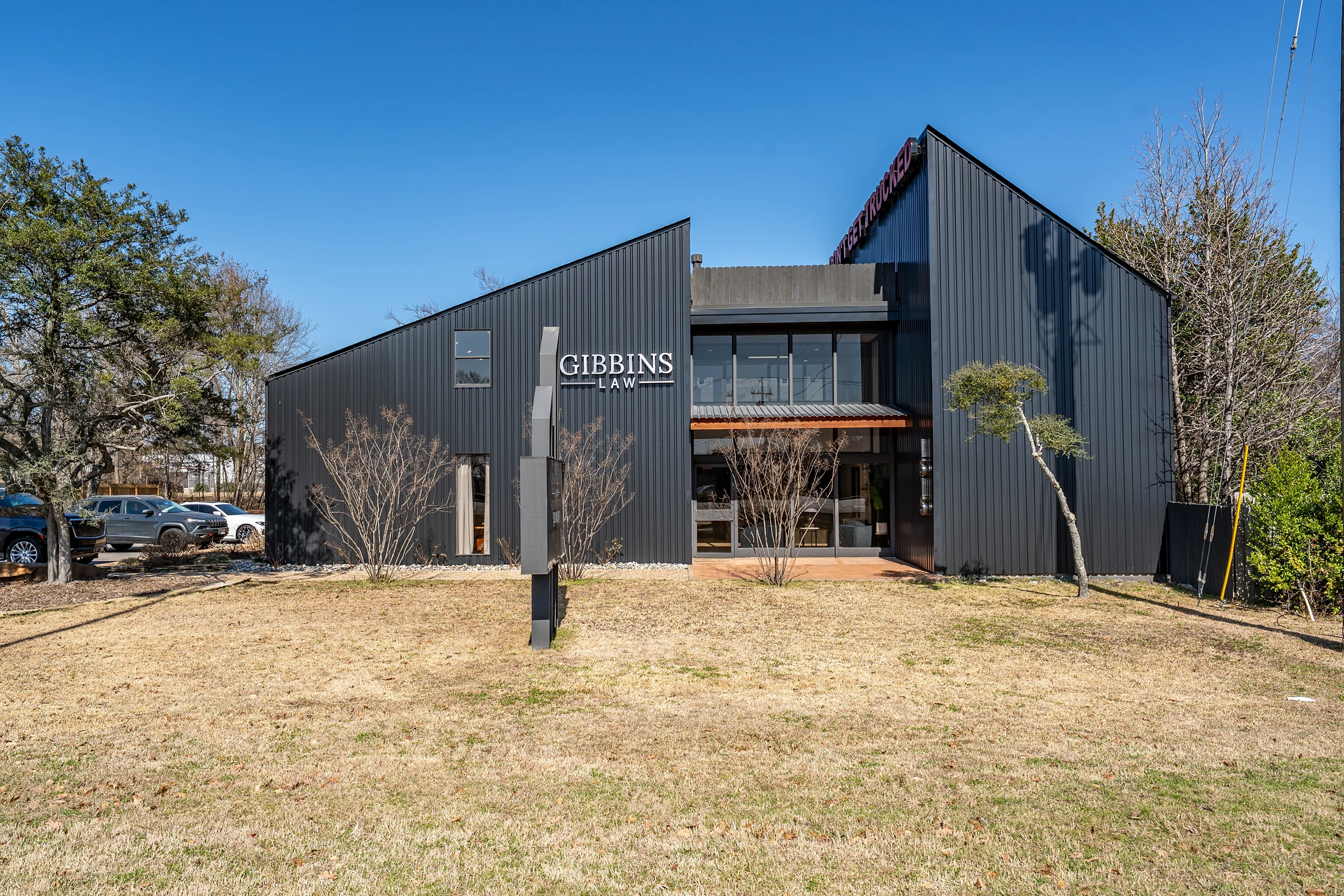
Loop 323 Office Property with Additional Lot
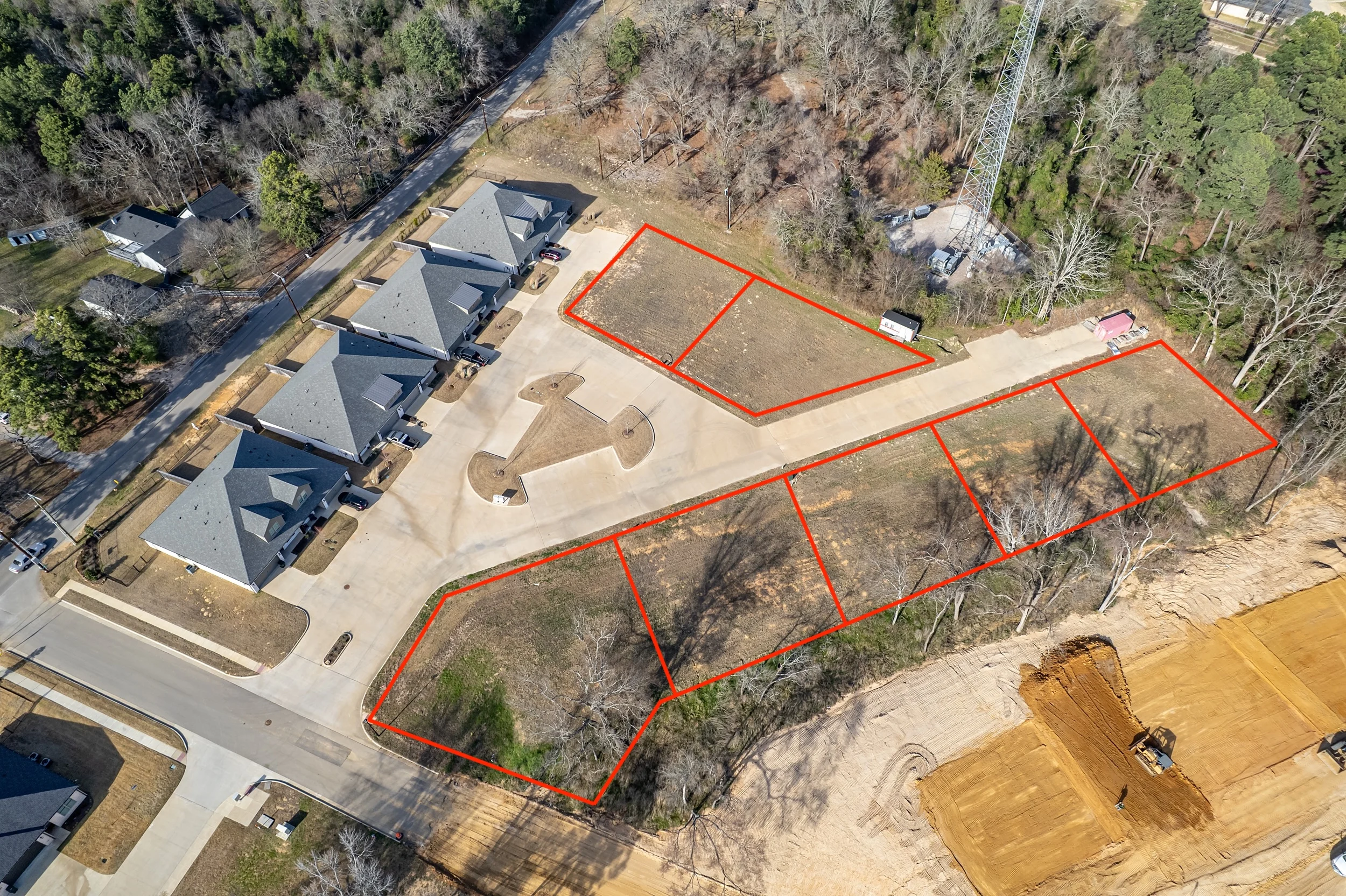
Seven-Lot Duplex Development Site
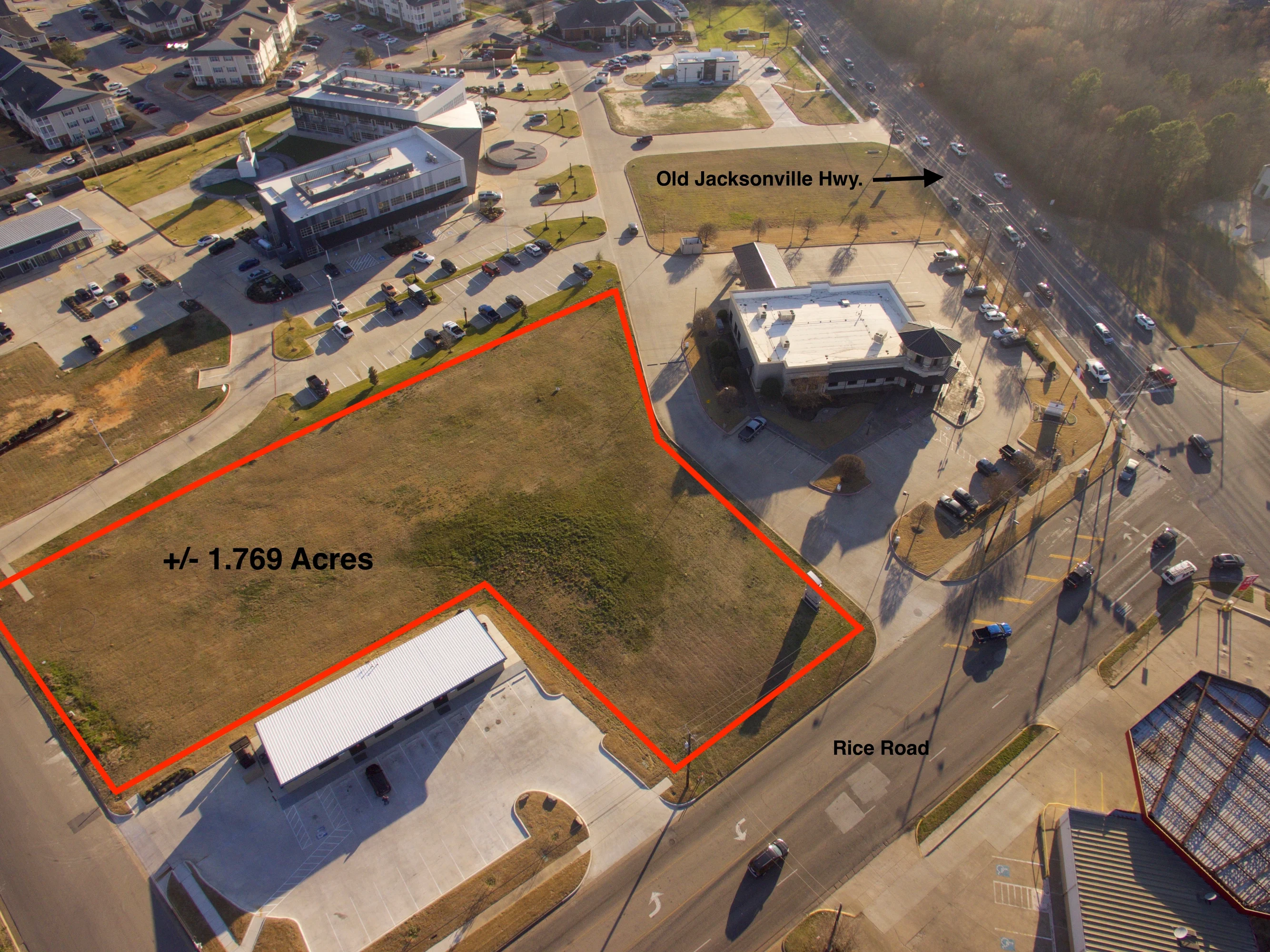
Old Jacksonville Highway & Rice Road
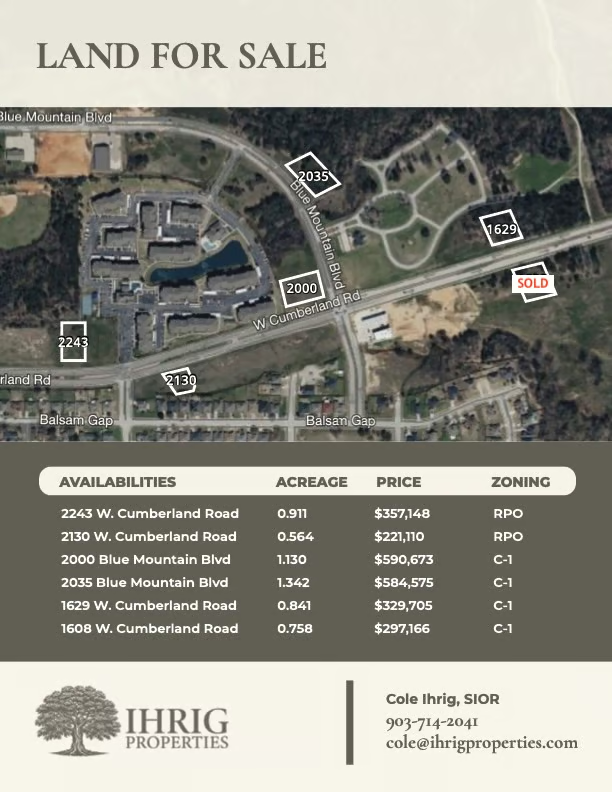
Cumberland Development Lots
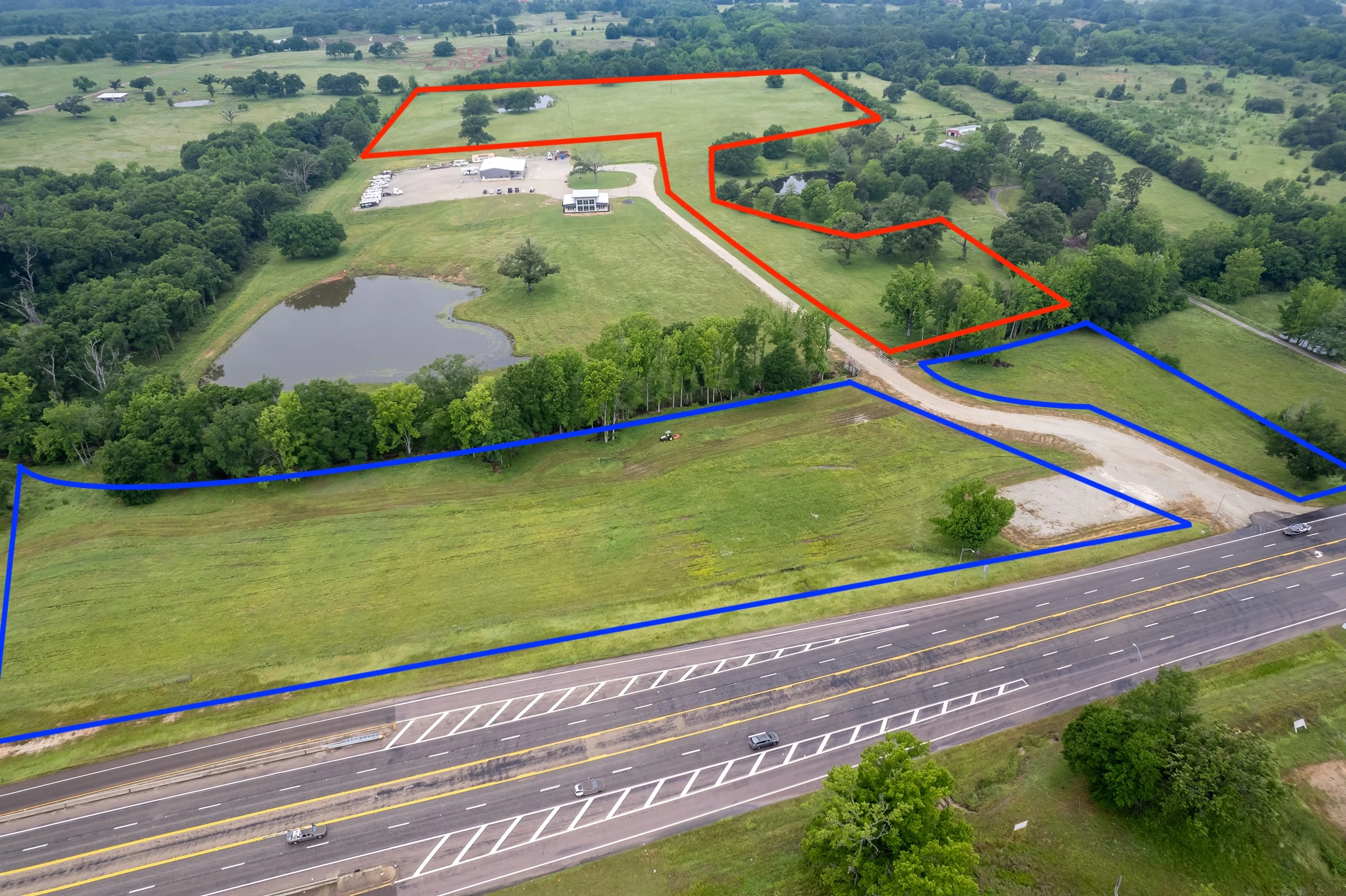
US-69 Development Land
Gross acres vs. developable acres
Land searches often begin with "we need five acres." That's a starting point, not the requirement. One five-acre tract might provide almost all its acreage for development; another might lose substantial usable area to drainage, floodplain, easements, setbacks, detention, difficult topography, unusual shape, access limitations, or development requirements.
Gross acreage is the total land area. Developable acreage is the portion that may realistically support the intended project after constraints are understood — and the difference can be significant. Exactly what can be developed should be determined by the appropriate engineers, surveyors, and governmental authorities. From a real estate perspective, the lesson is simple: don't compare land only by gross acreage.
What makes commercial land valuable?
Land value is created by a combination of characteristics. Two parcels across the road from one another can have materially different economics — one may have better access, existing utilities, a better shape, or allow a broader range of uses. Potential factors include:
- Location
- Permitted or potential use
- Frontage
- Access
- Utilities
- Parcel configuration
- Topography
- Surrounding development
- Traffic
- Visibility
- Infrastructure
- Demographics
- Development cost
- Scarcity
- Future growth
- Buyer demand
The acreage alone does not explain the difference.
What actually determines whether land works
Zoning & land use
Inside municipalities, zoning can affect permitted uses and development standards:
- Permitted uses
- Building placement & setbacks
- Parking
- Landscaping
- Signage
- Height
- Outdoor storage
- Density
- Development standards
Not every East Texas property is inside a municipality with the same framework. But "no municipal zoning" does not mean "no rules." Other considerations can still include:
- Deed restrictions
- Platting
- County requirements
- State requirements
- Utility requirements
- TxDOT access
- Floodplain
- Environmental regulations
- Development agreements
- Fire-code considerations
Even when a site carries a commercial zoning classification, a particular use — restaurant, automotive, medical, drive-thru, outdoor storage, alcohol-related, industrial — may require further investigation. Confirm the specific proposed use rather than relying on a broad "commercial property" label, and have title documents and any private deed restrictions reviewed by qualified legal counsel.
Price per acre can be misleading
Land is often marketed by price per acre. That metric is useful — and it can create bad comparisons. A $100,000/acre tract requiring utility extensions, significant grading, limited access, and substantial drainage area may not be cheaper to develop than a $150,000/acre tract that's flat, accessible, and served by utilities. The better comparison is acquisition cost + site-development cost + infrastructure + time + risk.
Smaller parcels and pad sites are often marketed by price per square foot. One acre contains approximately 43,560 square feet, so price per acre ÷ 43,560 ≈ price per square foot. The math helps compare listings presented differently — it doesn't make the properties physically comparable. Ihrig's own inventory illustrates this: smaller South Tyler development lots and larger outside-city tracts near a highway can carry very different per-square-foot pricing precisely because they serve different geographies, uses, parcel sizes, and regulatory settings. Commercial land pricing only makes sense in context.
The Ihrig Commercial Land Test
When a tract looks promising, we evaluate it in layers. A tract needs more than a good price — it needs a workable path from land to use.
Location
Should the project be here? Does the geography fit the business, development, tenant, or investment?
Access
Can people, customers, employees, or trucks enter and leave the property effectively?
Usable Land
How much acreage may realistically support the project after constraints?
Infrastructure
What utilities, roads, drainage, and site improvements exist or may be required?
Development Rules
What zoning, land-use, platting, deed, access, and other requirements need investigation?
Market
Is there demand for what the client intends to build?
Economics
What will it cost to acquire and make the property usable?
Flexibility
Can the property expand, subdivide, change users, or remain marketable later?
Commercial land due diligence
Land due diligence should be tailored to the property and intended project. Not every tract needs every study at the same stage — the objective is to identify the questions that could materially alter or kill the project before unnecessary capital is committed. Potential areas of investigation include:
- Survey
- Title
- Easements
- Deed restrictions
- Environmental conditions
- Floodplain
- Wetlands where applicable
- Topography
- Drainage
- Utilities
- Access
- Land use & zoning
- Soils / geotechnical
- Road requirements
- Development standards
- Market feasibility
A boundary survey is one piece of eventual site-planning work; environmental (e.g., a Phase I) matters especially where land had prior industrial or fuel-related use; and geotechnical/soil conditions can affect foundations, pavement, and excavation. These conclusions belong to qualified professionals. And remember: development cost often matters more than land cost — an apparently expensive site can be the more economical project if major infrastructure already exists.
Buy, sell, develop, or hold?
Before assuming development is the only path, compare an existing building (faster occupancy, less complexity) with land + ground-up development (more control, more time and risk). Landowners weighing options can sell now, hold, subdivide, assemble additional property, improve infrastructure, seek an end user, or develop — the answer depends on the site, market, capital, timing, and risk tolerance. Holding land is a legitimate strategy, but carries taxes, debt, opportunity cost, and market risk; a hold decision should be intentional, not a default.
Ihrig Properties can help across the whole path: site selection for businesses, development advisory once a site is identified, selling commercial land, price analysis, and buyer representation through acquisition.
Commercial land in Tyler & East Texas
Tyler contains several development environments — South Tyler, Cumberland Road, Old Jacksonville Highway, Loop 323, Toll 49, US-69, and surrounding Smith County — and a retailer, industrial operator, medical user, apartment developer, and professional office should not automatically be looking for the same land. Beyond Tyler, Ihrig works throughout East Texas including Longview, Mineola, Lindale, Jacksonville, Kilgore, Whitehouse, Bullard, and Flint. Each jurisdiction and site can have different land-use rules, utilities, infrastructure, customer bases, and costs. "East Texas land" is too broad to be a strategy — the search becomes useful when it gets specific.
Frequently asked questions about commercial land
What should I look for when buying commercial land?
Evaluate location, acreage, usable area, frontage, access, utilities, topography, drainage, floodplain, easements, parcel shape, land-use rules, development requirements, surrounding uses, market demand, and total development cost.
What is developable acreage?
Developable acreage generally refers to the portion of a property that may realistically accommodate improvements after physical and regulatory constraints are considered. Qualified technical professionals should determine a site's actual development capacity.
Is price per acre the best way to compare commercial land?
No. Price per acre is useful, but sites should also be compared based on usable acreage, access, utilities, infrastructure, development cost, location, and other characteristics.
How many square feet are in an acre?
One acre contains approximately 43,560 square feet.
Does road frontage mean I can put a driveway anywhere?
No. Access may be affected by the road authority, existing driveways, medians, traffic conditions, easements, and applicable design or permitting requirements.
How do I know whether utilities are available?
Utility availability should be verified with the appropriate providers. Buyers may also need to determine capacity, connection points, extension requirements, cost, and timing.
Can floodplain land be developed?
Potentially, depending on the site and project. Floodplain and drainage conditions should be evaluated by qualified professionals and the appropriate governmental authorities before making a development decision.
What does commercial zoning mean?
Commercial zoning generally allows certain commercial uses subject to the applicable zoning district and development regulations. It does not necessarily allow every type of commercial use.
What if a property is outside city limits?
Properties outside municipal boundaries may operate under a different regulatory framework, but can still be subject to deed restrictions, county and state requirements, access rules, utilities, floodplain regulations, environmental requirements, and other restrictions.
What is a commercial pad site?
A pad site is generally a smaller commercial development parcel, often associated with a larger retail or commercial development or major roadway. Common users include restaurants, banks, retailers, medical offices, and service businesses.
What is a land assemblage?
A land assemblage combines multiple parcels to create a larger or more useful development site.
Can Ihrig Properties help me determine what can be built on a property?
Ihrig Properties can help evaluate commercial real estate and development considerations and coordinate information with relevant professionals. Engineering, architecture, zoning, environmental, legal, and other technical conclusions should be made by the qualified professionals responsible for them.
Can Ihrig Properties help me buy commercial land?
Yes. Ihrig Properties provides buyer representation, site selection, commercial brokerage, and development advisory throughout East Texas.
Can Ihrig Properties help sell commercial land?
Yes. Ihrig Properties represents landowners selling commercial and development property.
Can you find land that is not currently listed by Ihrig Properties?
Yes. Buyer representation and site selection can involve searching the broader East Texas commercial real estate market.
Don't buy acreage. Buy a site that works.
Start with what you're trying to build or operate, then evaluate the land. Tell us the project, market, acreage, building requirement, access needs, utility requirements, and timeline — we'll help identify and compare the sites worth investigating.